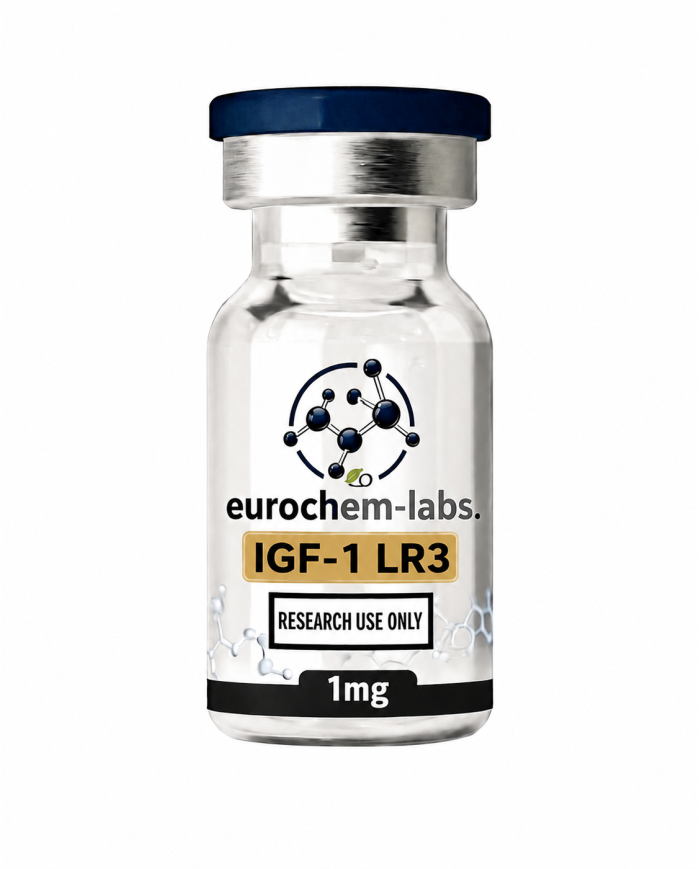
IGF-1 LR3 1mg
IGF-1 LR3 peptide is a synthetic analog of insulin-like growth factor-1 (IGF-1), engineered for extended biological activity and increased stability in peptide research. The IGF-1 LR3 peptide is widely studied in peptide and cellular research because growth factor-related peptides play an important role in cellular growth, protein synthesis, and metabolic signaling pathways. Researchers investigate the IGF-1 LR3 peptide to better understand how signaling peptides influence muscle cell activity, tissue growth, and cellular regeneration mechanisms. Because peptides such as the IGF-1 LR3 peptide participate in biological processes related to growth signaling and anabolic pathways, this peptide has become an important subject of research in studies focused on growth factors.
Long Description
Definition and Composition
IGF-1 LR3 peptide is a synthetic analog of insulin-like growth factor-1 (IGF-1), modified to provide increased biological stability and prolonged activity in research environments. The IGF-1 LR3 peptide belongs to a class of growth factor-related peptides involved in cellular signaling and anabolic biological pathways. In peptide research, IGF-1 LR3 peptides are widely studied because IGF-related peptides can influence processes associated with cellular growth, protein synthesis, and tissue development. Due to these biological properties, the IGF-1 LR3 peptide has become an important peptide of interest in research focused on anabolic peptides, growth factor signaling, and cellular regeneration mechanisms.
Key Biological Effects Studied in IGF-1 LR3 Peptide Research
Cellular Growth Research: The IGF-1 LR3 peptide is widely studied for its role in biological processes related to cellular growth and development.
Protein Synthesis Research: Scientists investigate how growth factor peptides such as the IGF-1 LR3 peptide influence anabolic signaling and protein synthesis pathways.
Muscle Physiology Research: The IGF-1 LR3 peptide is examined in peptide research related to muscle cell activity and skeletal muscle biology.
Metabolic Signaling Research: Researchers study how peptides such as the IGF-1 LR3 peptide influence insulin-like signaling pathways and cellular metabolism.
Cellular Regeneration Research: The IGF-1 LR3 peptide is also explored in studies investigating tissue regeneration and repair-related biological mechanisms.
Mechanism of Action
The IGF-1 LR3 peptide is believed to exert its biological activity through mechanisms associated with growth factor signaling, anabolic pathways, and receptor-mediated cellular communication. Research suggests that peptides related to insulin-like growth factor signaling, such as the IGF-1 LR3 peptide, interact with cellular receptors involved in growth and metabolic regulation.
Growth Factor Signaling: The IGF-1 LR3 peptide is studied for its potential ability to influence cellular growth and anabolic signaling pathways.
Protein Synthesis Pathways: Scientists investigate how anabolic peptides such as the IGF-1 LR3 peptide influence pathways involved in protein production and cellular repair.
Metabolic Regulation Research: The IGF-1 LR3 peptide is examined for its interaction with signaling pathways related to metabolism and energy utilization.
Potential Research Applications
Growth Factor Research: The IGF-1 LR3 peptide is widely studied in experimental models investigating anabolic signaling and cellular development.
Muscle Biology Research: Researchers examine how peptides such as the IGF-1 LR3 peptide influence muscle physiology and skeletal muscle signaling pathways.
Cellular Regeneration Research: The IGF-1 LR3 peptide is studied in research investigating tissue growth and regenerative biological mechanisms.
Metabolic Research: Scientists investigate how growth factor peptides such as the IGF-1 LR3 peptide influence insulin-like signaling and metabolic pathways.
Safety and Legal Considerations
IGF-1 LR3 peptide products are typically sold as research compounds. These peptides are not approved for human or animal use by regulatory authorities such as the FDA or EMA. Further research is required to fully understand the biological activity, safety profile, and potential research applications of peptides such as the IGF-1 LR3 peptide.
This product is strictly for laboratory and research purposes only. It is not intended for human or animal consumption.