Hrvatski
 Magyar
 Deutsch
 Español


There are no more items in your cart

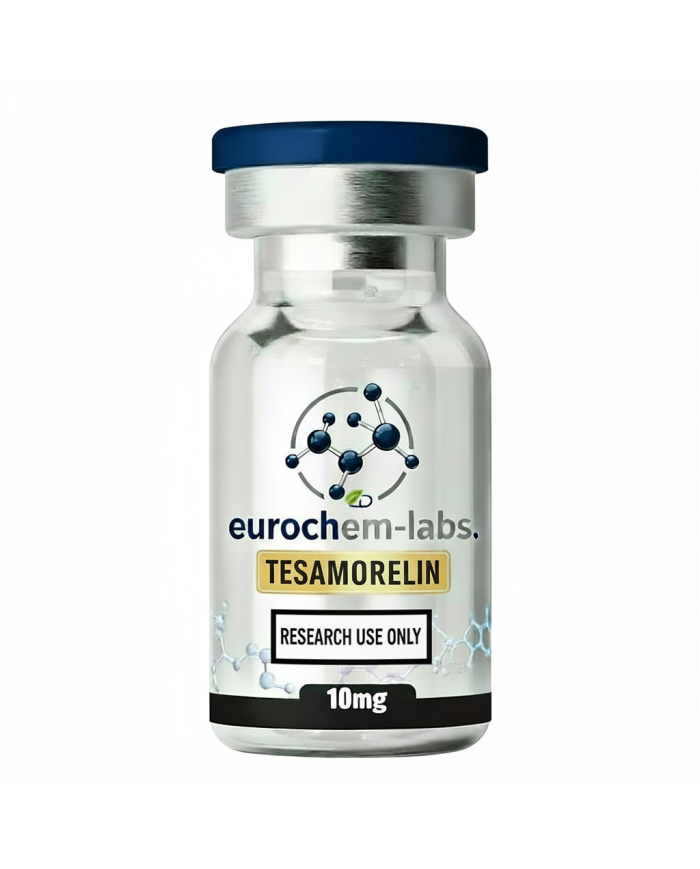
Tesamorelin peptide is a synthetic growth hormone–releasing hormone (GHRH) peptide studied in peptide research for its interaction with endocrine signaling pathways that regulate growth hormone secretion. The Tesamorelin peptide belongs to a class of regulatory peptides that influence the growth hormone axis and metabolic signaling. Researchers investigate the Tesamorelin peptide to better understand how GHRH peptides affect metabolic regulation, fat metabolism, and hormonal signaling pathways. Because peptides such as the Tesamorelin peptide influence growth hormone pathways, this peptide has become an important subject of research in studies focused on metabolism, endocrine signaling, and peptide-based hormonal regulation.
Tesamorelin peptide is a synthetic analog of growth hormone–releasing hormone (GHRH) consisting of a modified peptide sequence designed to enhance stability and biological activity. The Tesamorelin peptide belongs to a group of regulatory peptides that stimulate GHRH receptors involved in growth hormone signaling. In peptide research, the Tesamorelin peptide is studied for its ability to influence the growth hormone axis and endocrine signaling pathways. Because peptides that interact with GHRH receptors regulate growth hormone release, the Tesamorelin peptide has become an important peptide of interest in studies focused on metabolism, hormonal signaling, and endocrine regulation.
The Tesamorelin peptide acts as a GHRH analog and interacts with receptors in the pituitary gland that regulate growth hormone secretion. Research suggests that peptides such as the Tesamorelin peptide stimulate the release of endogenous growth hormone through endocrine signaling pathways.
Tesamorelin peptide products are typically sold as research compounds. These peptides are not approved for human or animal use outside regulated medical applications. Further scientific research is required to fully understand the biological activity, safety profile, and potential research applications of the Tesamorelin peptide.
This product is strictly for laboratory and research purposes only. It is not intended for human or animal consumption.